Your entry point into the world of vvvv
8 Sessions · Live Online · Mondays 18–21h (UTC+1)
In partnership with Refik Anadol Studio
Recordings will become available the day after the live lesson.
Join a diverse group of artists, designers, technologists, musicians, architects, and curious beginners for an immersive introduction to computational design and visual programming with vvvv. Over eight weeks, you’ll develop the visual intuition, confidence, and creative momentum that make real‑time graphics feel natural and creatively empowering. This first chapter of your vvvv journey focuses on exploration, playful experimentation, and understanding how to think visually with the tool, laying the foundation for deeper, more structured work as you continue to grow.
This class is designed for people who think visually. If you’ve seen what vvvv enables in interactive installations, media art, stage design, or data‑driven experiences but never knew how to begin, this course gives you the structure and confidence to take your first steps. You will learn to work with vvvv’s node‑based environment in a way that feels intuitive, playful, and creatively open. No prior programming experience is required. The focus is on understanding core concepts, experimenting with visual systems, and developing your own creative workflow. You will gain a solid foundation that prepares you for more advanced system‑oriented work in the next level.
Continue your journey with the Intermediate Foundations Class
After eight weeks of visual exploration, creative experimentation, and building your first interactive systems, many learners reach a natural turning point. You begin to recognize patterns, structures, and possibilities that call for deeper tools. Questions arise: How do I build larger systems? How do I structure logic? How do I turn sketches into something more durable?
The VVVV Intermediate Foundations Class is designed for exactly this moment. It introduces you to the conceptual and structural side of vvvv — object‑oriented patching, dataflow architecture, language methodologies, and the workflows used in professional installations and media art. This is where your creative intuition meets technical depth, enabling you to design systems rather than just patches.
When enrolling in the Beginner Class, you can add the Intermediate Foundations course at a reduced rate, creating a coherent two‑step learning path from visual exploration to system‑level thinking.


What you will learn
The Beginner Class focuses on visual thinking, experimentation, and creative exploration. You will learn how to:
- navigate the vvvv gamma interface with confidence
- build your first patches and visual compositions
- work with 2D and 3D graphics in real time
- use textures, images, and audio-reactive techniques
- create patterns, structures, and generative systems using spreads and iteration
- apply simple creative coding algorithms for animation and movement
- take first steps into shader-based effects with VL.Fuse
Beginner Class Curriculum
1 — Getting Started:
Navigating the vvvv Environment
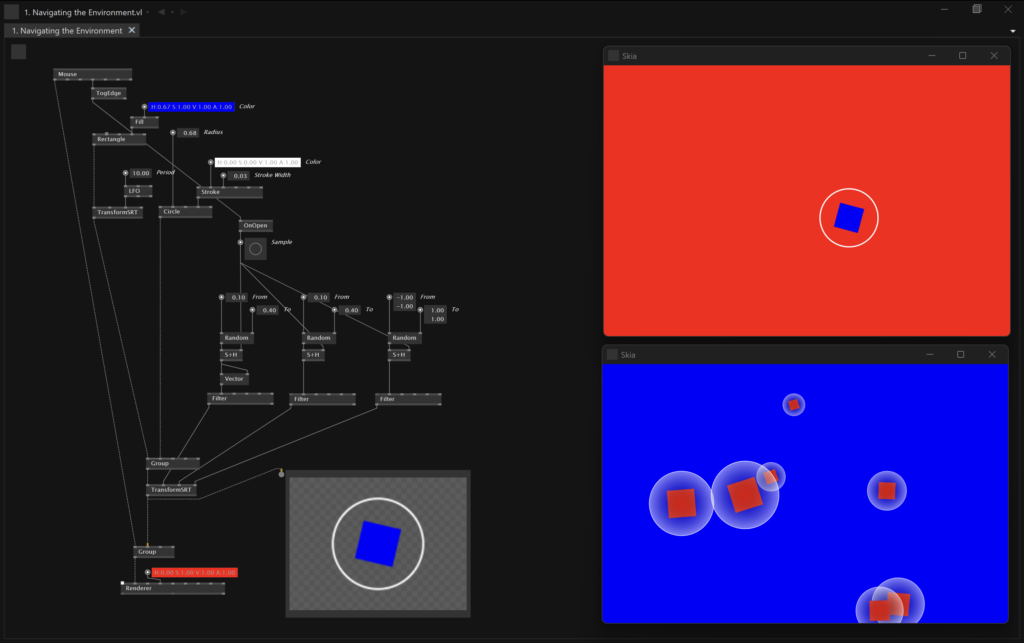
You begin by getting comfortable inside vvvv’s visual programming environment. You’ll learn how to navigate the interface, connect nodes with confidence, and create your first visual compositions. This session builds the intuitive fluency you need to express ideas visually from day one.
2 — Exploring Space:
The Real‑Time 3D Pipeline
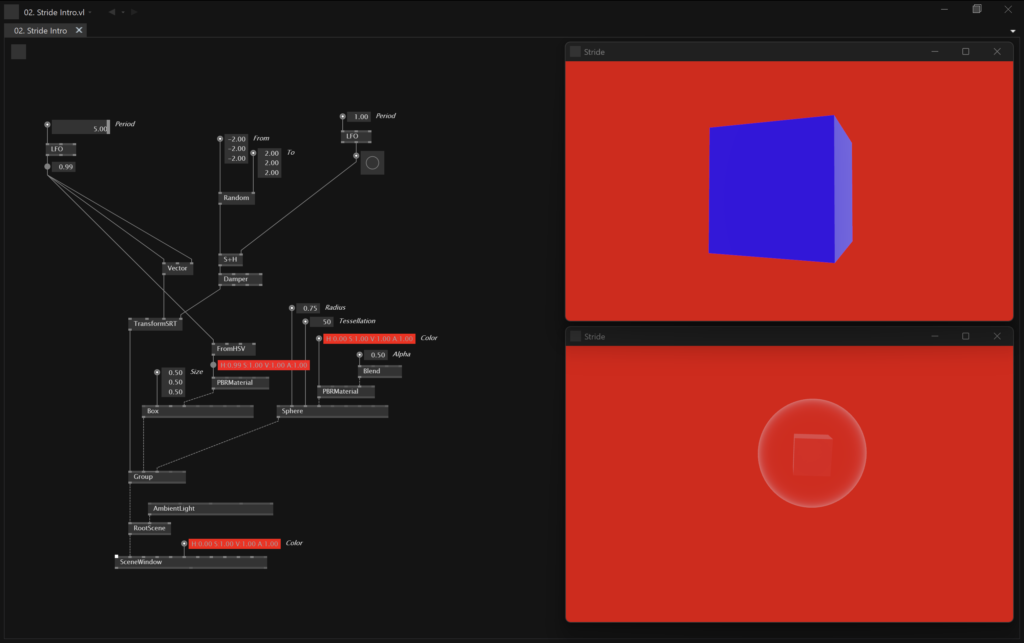
You step into the world of real‑time 3D. You’ll explore how geometry, transforms, lighting, and cameras work together, and how to bring objects to life in space. This session opens the door to creating interactive environments and spatial experience
3 — Visual Rhythm:
Textures, Images & Audio‑Reactive Graphics
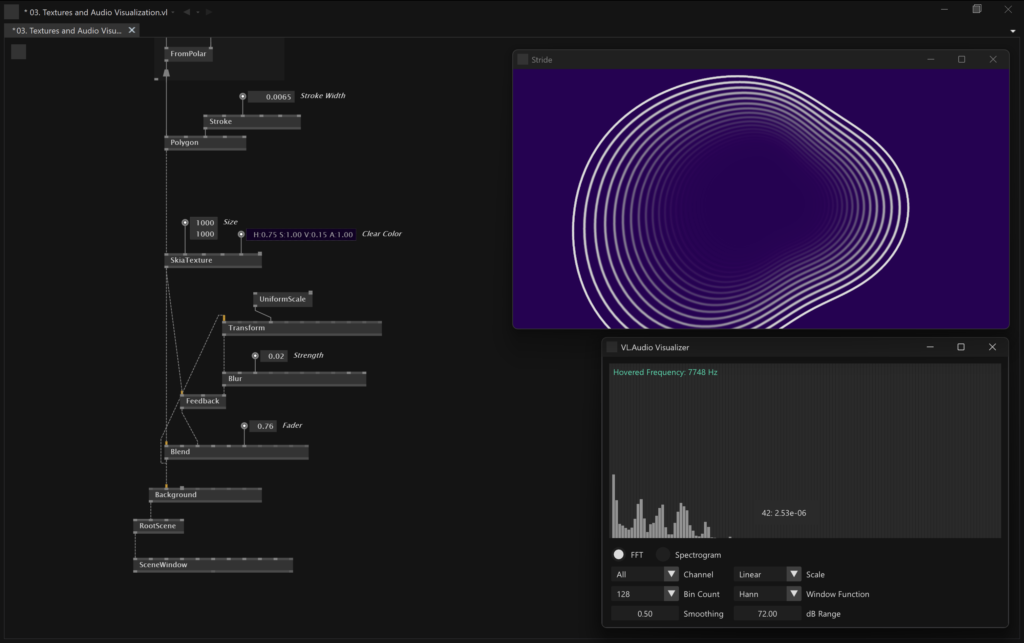
You learn how to work with textures, images, and sound‑reactive techniques. By using audio as a creative driver, you’ll create dynamic visuals that respond in real time, ideal for audiovisual installations and performance contexts.
4 — Patterns in Motion:
Iterating with Spreads & Lists
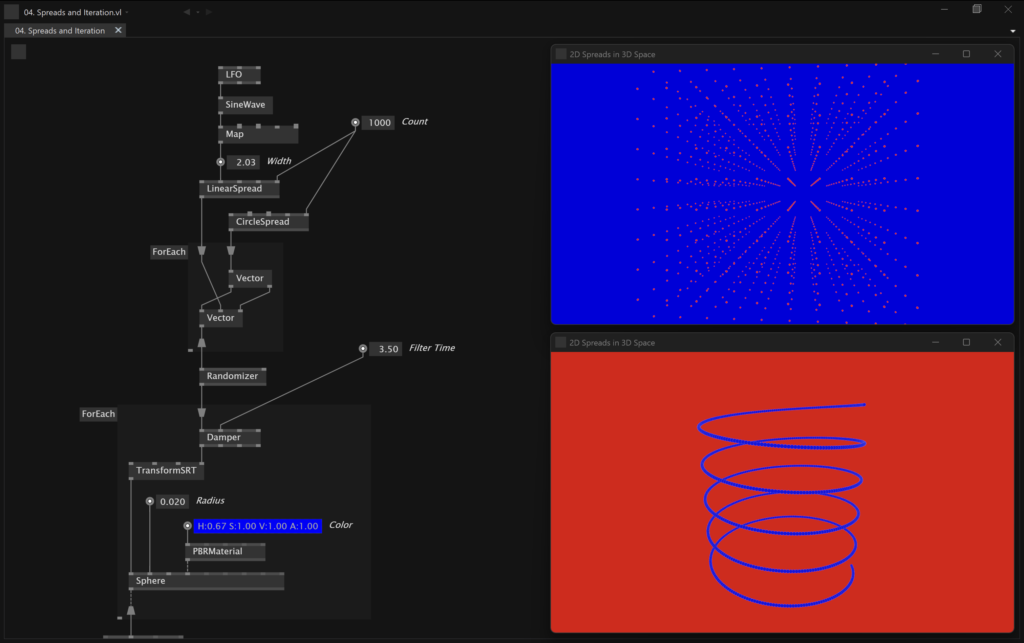
You discover how to work with collections of data to generate patterns, structures, and motion. Spreads and iteration allow you to move from single objects to rich, evolving systems — a core skill for generative design.
5 — Generative Design I:
Movement, Logic & Creative Algorithms
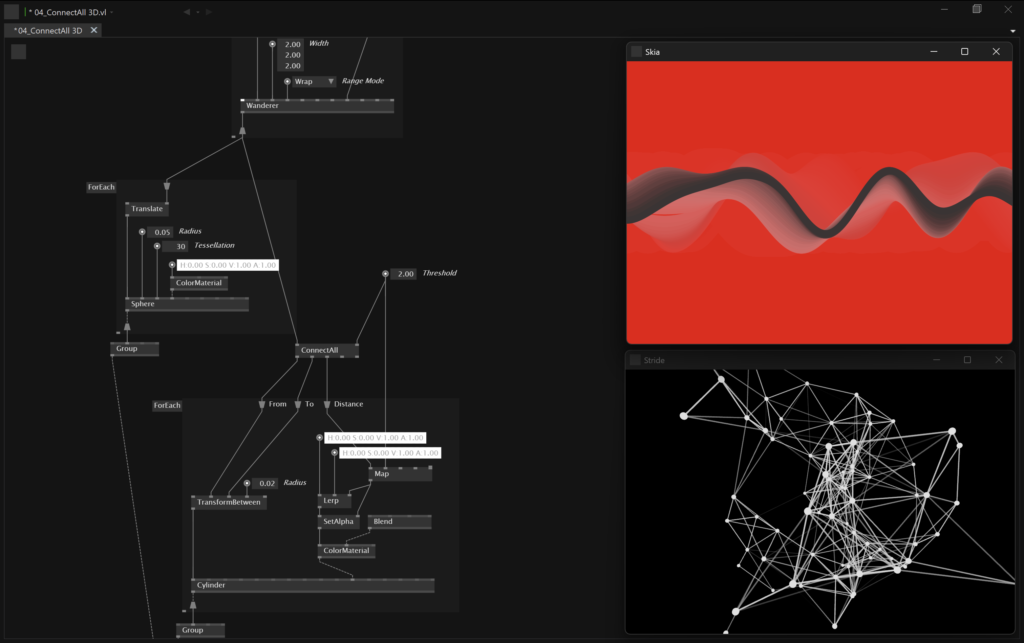
You explore the logic behind movement and behavior. Through creative coding techniques, you’ll animate your visuals and learn how algorithms can bring your designs to life with rhythm, variation, and flow.
6 — Generative Design II:
Systems, Behaviors & Emergence
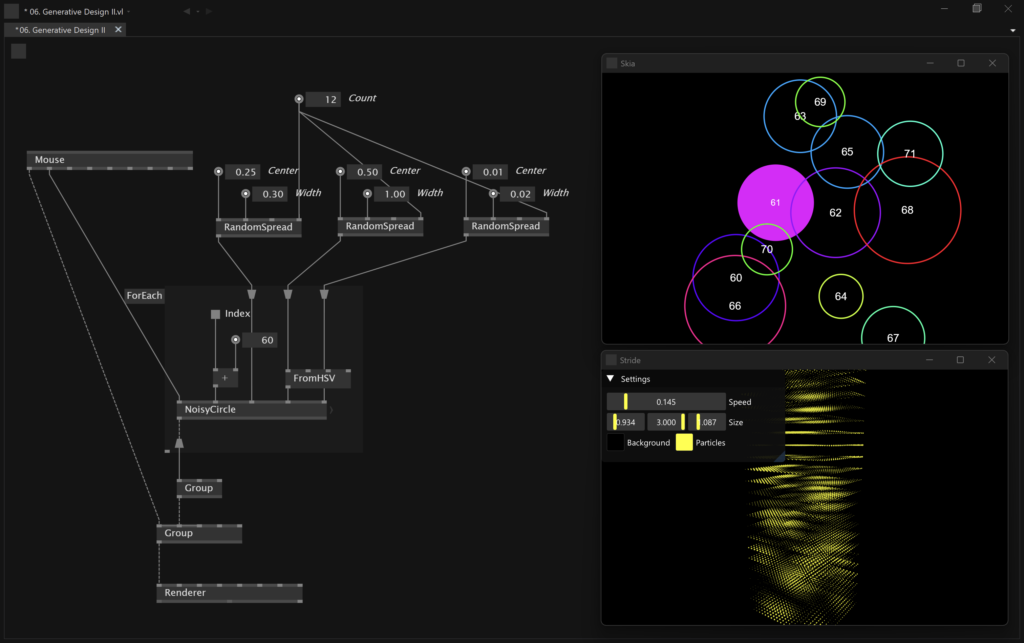
In this session you shift from shaping individual behaviors to designing full generative systems. You explore how simple rules, interactions, and feedback loops create complex, emergent visual structures, and you learn to guide these dynamics rather than directly animating them.
7 — Data Visualization:
Turning Information into Visual Form
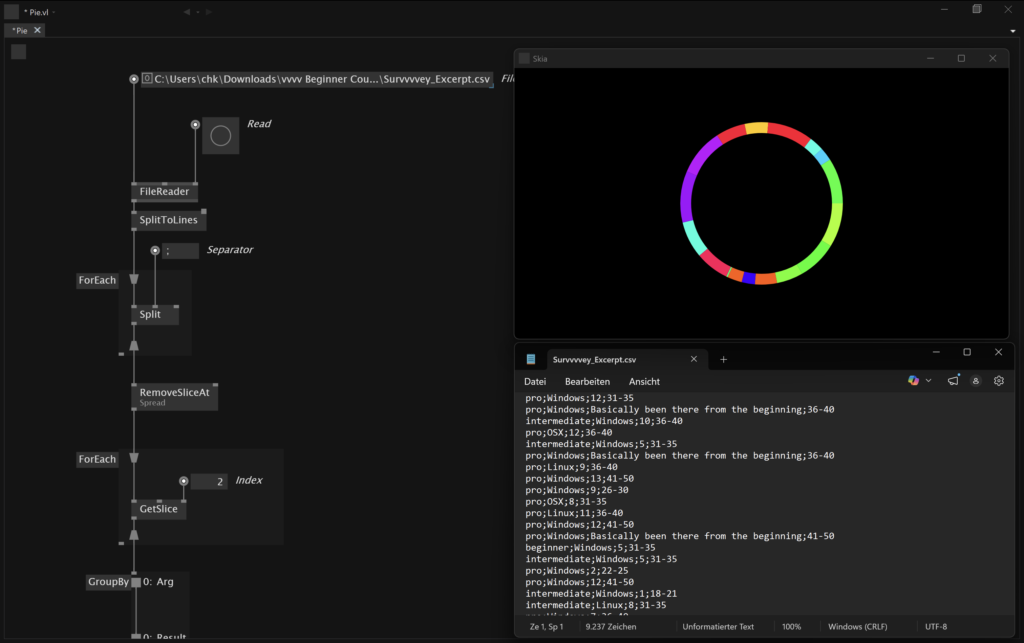
You learn how to transform raw information into meaningful visual form. This session introduces techniques for collecting, processing, and displaying data. This all becomes useful for artistic, scientific, and analytical projects alike.
8 — Shader Patching with FUSE:
GPU‑Powered Particles, Fluids and more
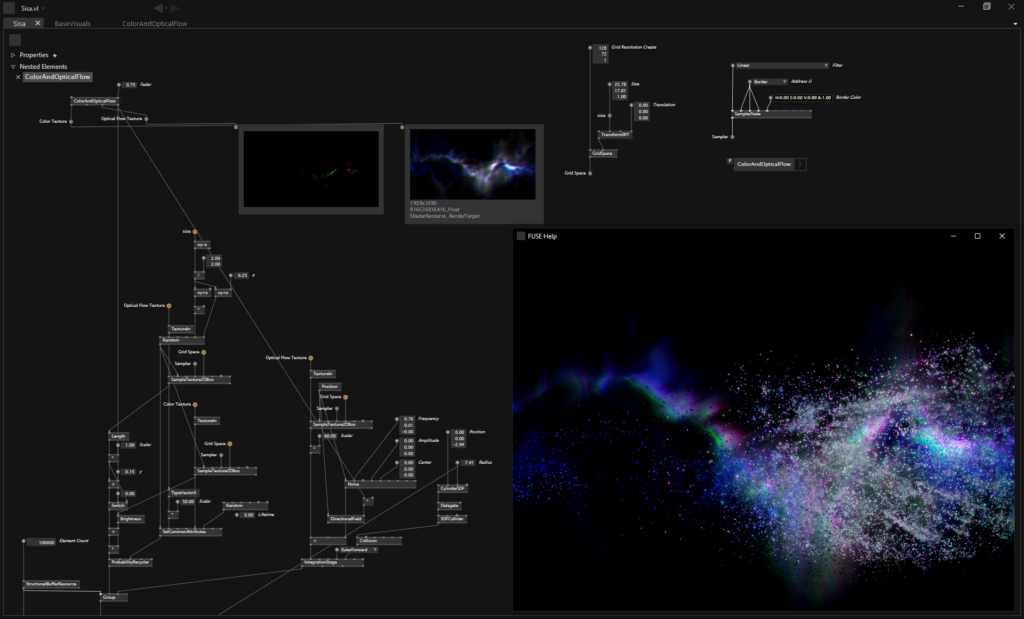
You take your first steps into GPU‑powered workflows. Using VL.Fuse, you’ll create dynamic visual effects, manipulate geometry, and expand your creative vocabulary with shader‑based techniques — a powerful gateway into advanced real‑time graphics.