Wednesday 25 and Thursday 26 November 2026, 6 – 9 pm, Berlin Time
2 live lessons of 3 hours, in English
Live on Zoom. Recordings available for at least three years after purchase.
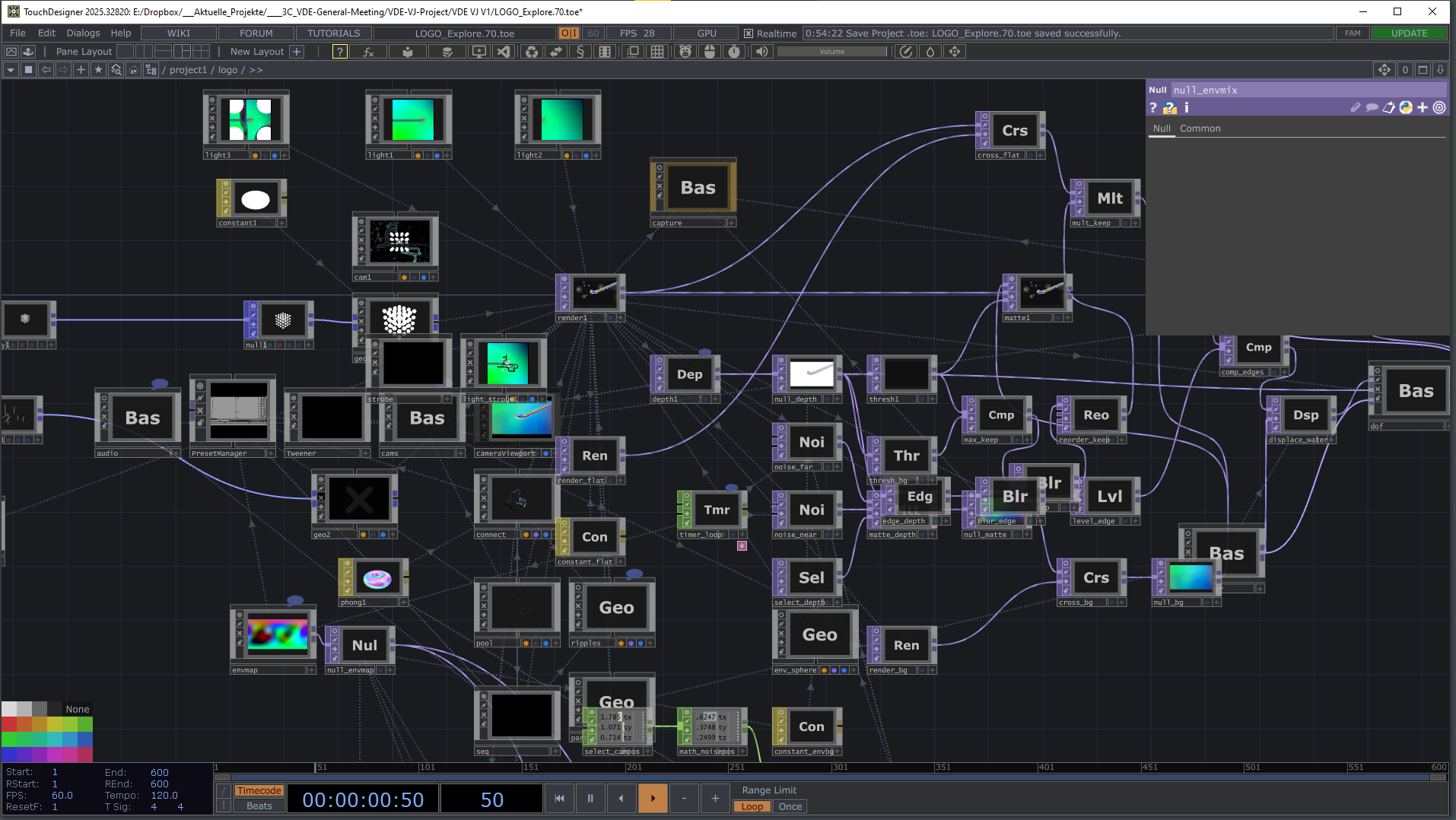
You know the file. Nobody wants to open it, including the person who built it. Somewhere in there is a value that three other things depend on, and nobody remembers which three.
It did not get that way through incompetence. It got that way through a series of small, reasonable decisions taken early, when the project was still small enough that none of them mattered. By the time they matter, they are load-bearing.
Jonas Margraf has worked at a scale where these decisions get expensive rather than merely annoying. Two sessions on what goes wrong, why, and what he does instead.
Intermediate and advanced users whose projects have outgrown what they can hold in their head — more machines, more venues, more collaborators, or simply a file that has become frightening. Not suited for beginners.
What you will learn
The course starts from one big, messy spaghetti patch, a fixed generative project that does its job and little else well. The first session goes through the deadly sins of TouchDesigner system architecture. The second covers what to do instead, and where the rules stop mattering.
Session 1 — The deadly sins of TouchDesigner system architecture
Jonas opens one of those projects everyone has made at least once: a single flat network with Python references crossing in every direction, paths that only resolve on the laptop it was built on, parameters scattered wherever they were needed at the time, copy-pasted components, default node names, code living inside the file instead of next to it. It works, until it has to run somewhere else, be handed to someone else, or grow. The session goes through each of these decisions, what it costs later, and why it looked reasonable when it was made.
Session 2 — What to do instead
The same project, rebuilt around a few habits that scale: components externalised as .tox files, all code kept in external files, UI and engine kept apart, every component talking to the outside only through its own custom parameters, relative references throughout. The session closes with the question that matters in practice: where a bit of spaghetti is fine, and where it will come back to bite you.
Good to know
You get access to the recording, which you can refer to for at least three years after purchase.
⇒ Solid TouchDesigner fundamentals.
⇒ No prior scripting experience assumed.
⇒ A recent PC or Mac, discrete GPU recommended.
⇒ Latest stable TouchDesigner build.
⇒ A stable internet connection, a three-button mouse, and a second monitor if you have one.
Any Questions?
Please check our general FAQ first. Most questions about booking, prices, tiers, recordings and refunds are answered there, and it is the quickest way to your answer.
Still not the answer you were looking for? Then write to us: