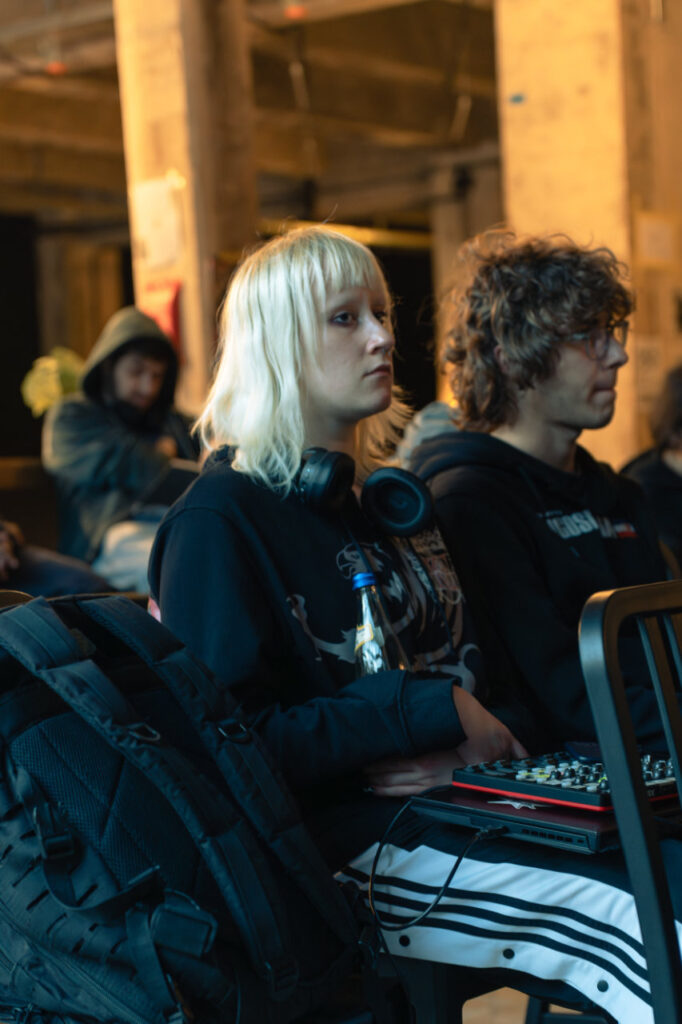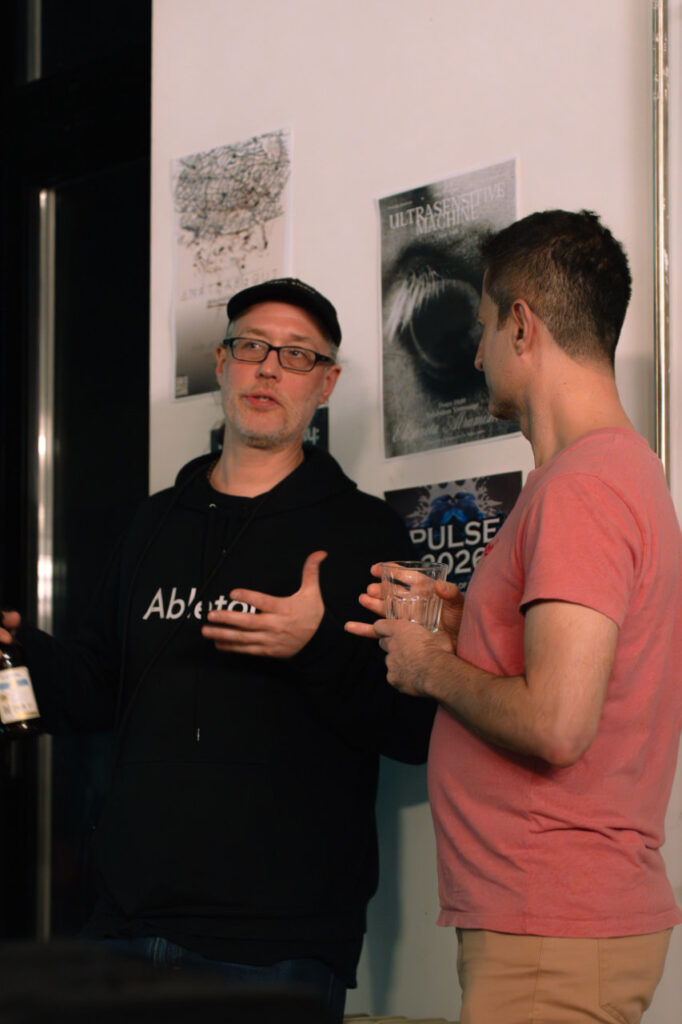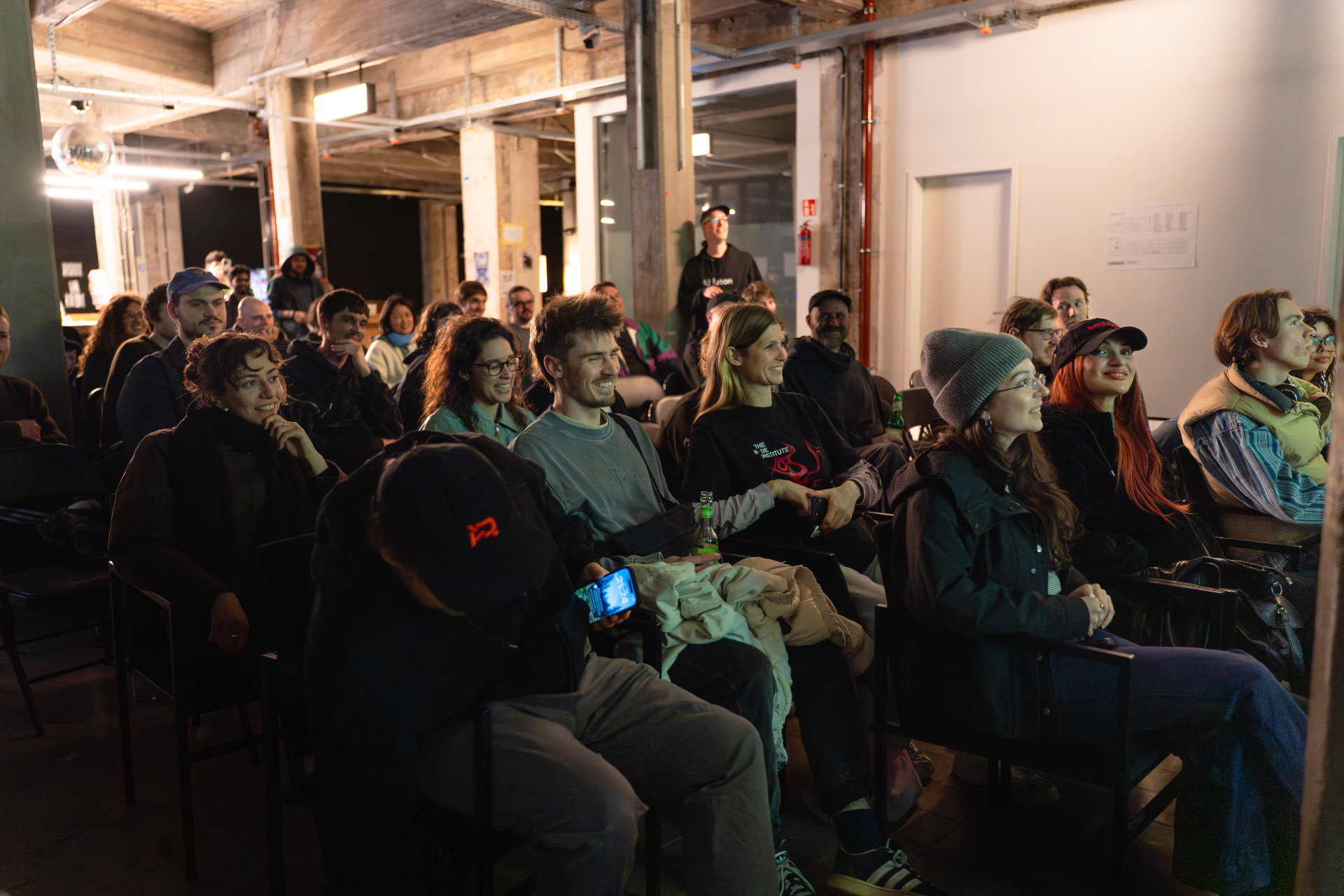
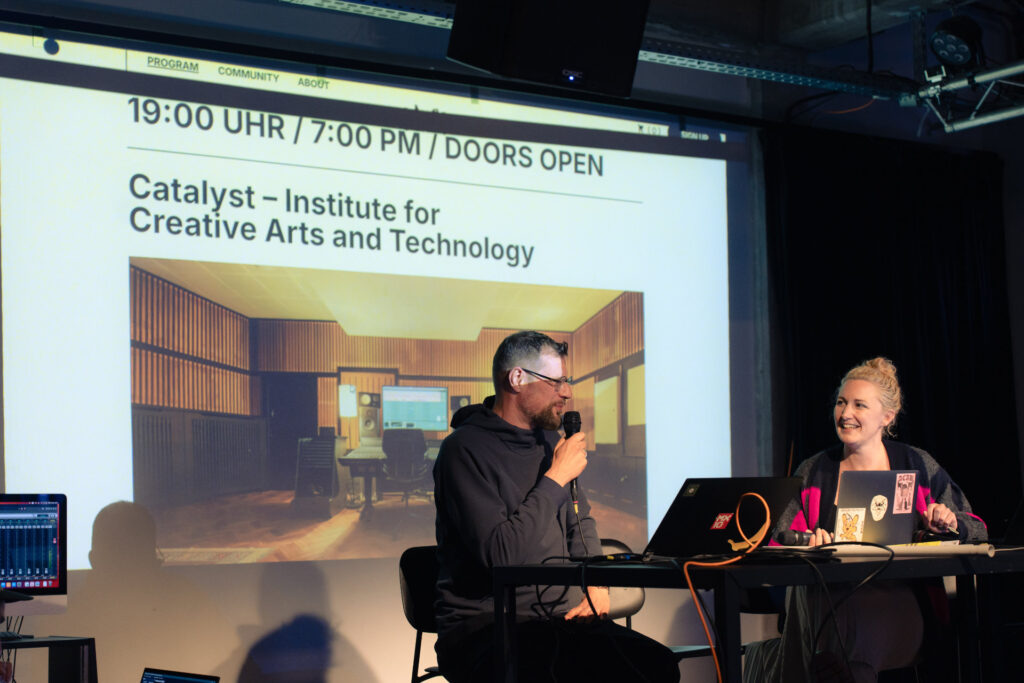
Inside the halls of Funkhaus Berlin, the Catalyst Institute of Creative Arts and Technology hosted the 35th TouchDesigner Roundtable—an evening where technical experimentation met artistic reflection. Moderated by Stefan of The NODE Institute, the gathering moved beyond software demos into a wider conversation about creativity, responsibility, and community.
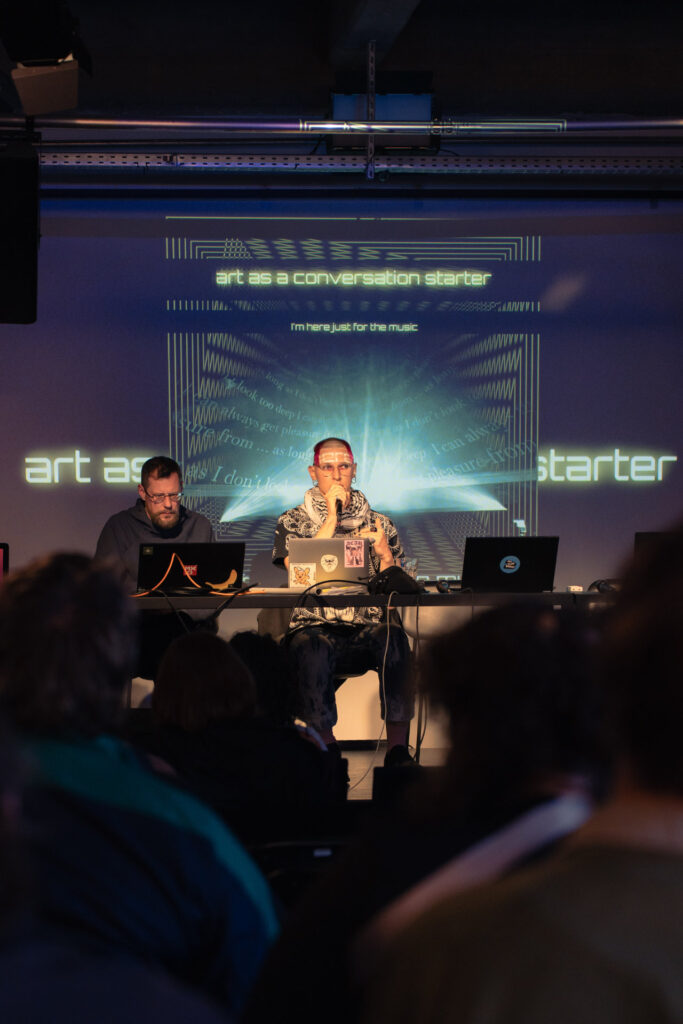
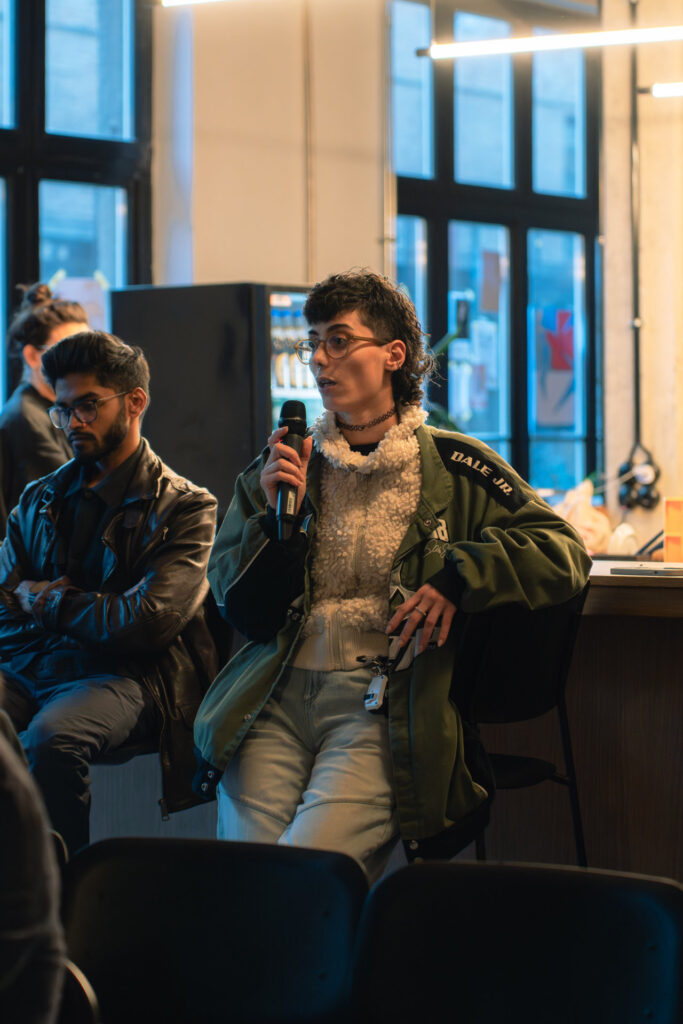
The night opened with a striking contribution from Abstraqt, media artist and Catalyst facilitator. Drawing from experiences in the Moscow music scene during the outbreak of the war in Ukraine, Sasha presented “I’m here just for the music,” a thoughtful critique of political detachment in creative spaces. Their practice often connects digital systems with human presence, exemplified by “Who Do We Left Behind When We Come Together,” an interactive fundraiser for families in Gaza where visitors activated visuals through touch. Sasha also shared handmade “noise-makers” developed in Berlin workshops supporting Palestine solidarity protests, bringing traces of the street into the performance space.
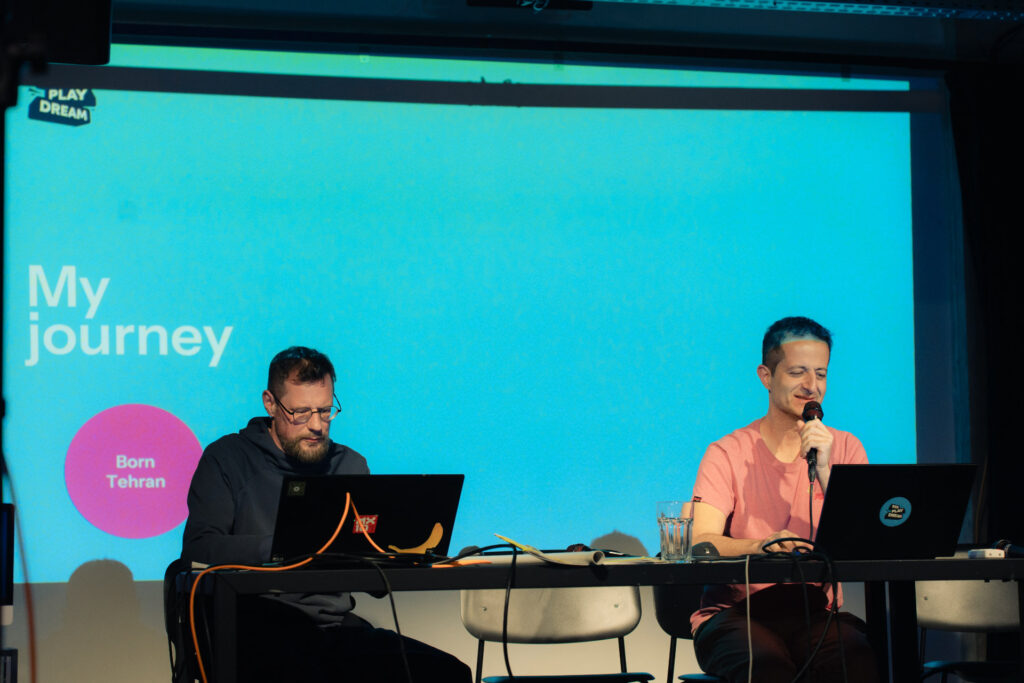
From activism the evening shifted toward practical invention. Bahram Pourghadiri introduced seeplayshow, a lightweight platform for remote installation control. Built with AI assistance and no formal programming background, the tool enables artists to push custom controls to the cloud instantly. During the live demo, audience members manipulated visuals from their phones through a simple web link. Bahram stressed his commitment to keeping the platform free, lowering barriers for artists working beyond traditional development workflows.
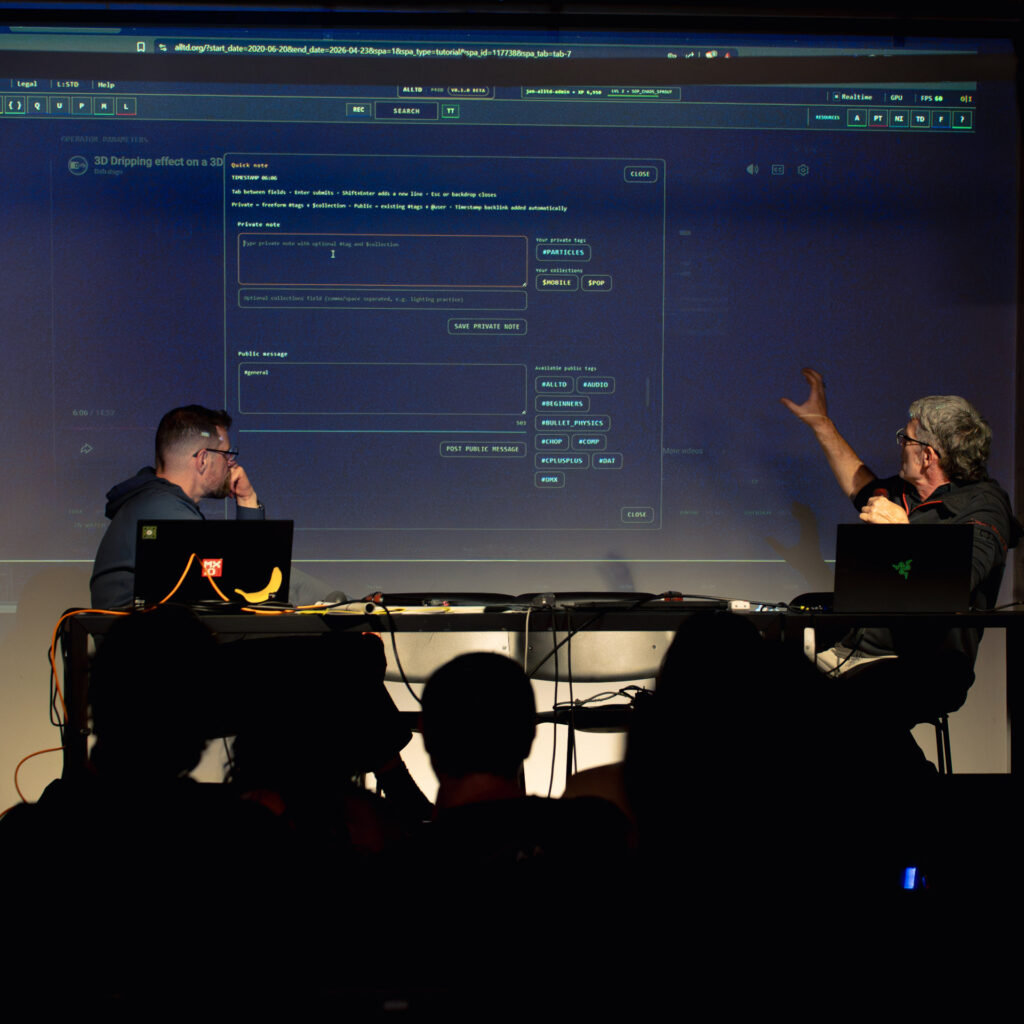
The final presentation came from Jan Gryczan, who revealed the transformation of alltd.org into a powerful AI-assisted archive for TouchDesigner learning. Developed during what Jan called a “long winter in Riga,” the platform now indexes thousands of tutorial transcripts, generating summaries, timestamps, and learning tools while keeping knowledge searchable and accessible. It is an ambitious grassroots response to the growing paywalling of specialist knowledge.
As conversations drifted toward future retreats and the next roundtable, one theme remained unmistakable: the TouchDesigner community is evolving beyond visual spectacle alone—toward shared knowledge, critical dialogue, and the collective building of tools and culture.